Krav Maga vs Brazilian Jiu-Jitsu for Self-Defense: Why I Train Both
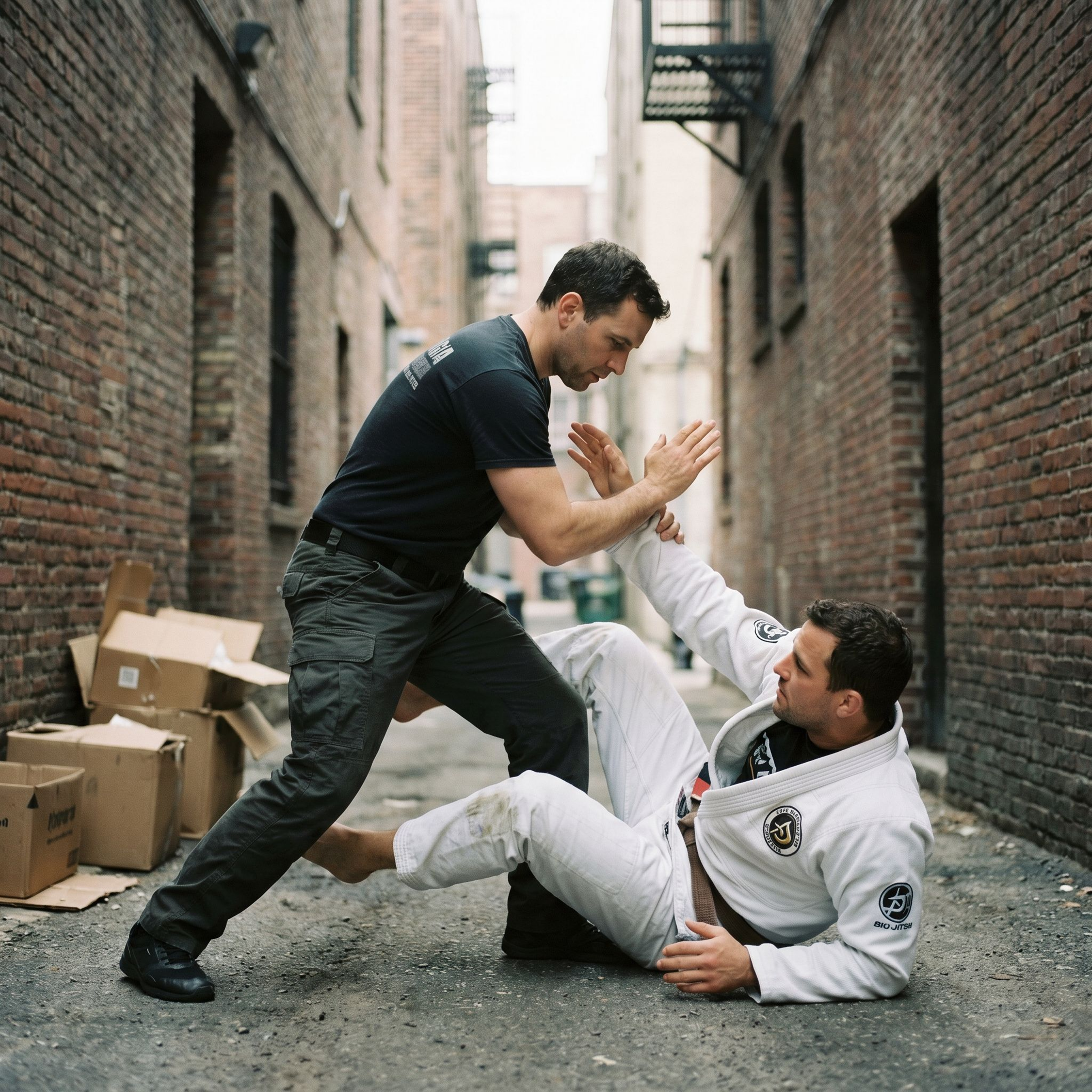
When people talk about the best martial art for self-defense, two names usually come up: Krav Maga and Brazilian Jiu-Jitsu. After training in both, I believe they each serve different purposes—and understanding that difference is important if your goal is real-world self-defense.
In my opinion, Krav Maga is one of the best self-defense systems because it is built around survival. Modern Brazilian Jiu-Jitsu, while extremely effective, is often taught more as a sport unless the school specifically incorporates self-defense training into its curriculum.
Why Krav Maga Is Great for Self-Defense
Krav Maga was designed for real-life violence and survival situations. It teaches people how to react under pressure, defend themselves quickly, and escape dangerous situations safely. One of the biggest strengths of Krav Maga is the survival mindset it develops.
The goal is not to “win” a fight or score points. The goal is survival.
Training often includes:
Defending against surprise attacks
Weapon defenses
Multiple attacker scenarios
Situational awareness
Stress and adrenaline management
Aggressive counterattacks when necessary
Krav Maga teaches you to stay aware, decisive, and mentally prepared during chaos. That mindset is incredibly valuable because real-world violence is unpredictable and rarely follows rules.
Why Brazilian Jiu-Jitsu Can Become More of a Sport
Brazilian Jiu-Jitsu is one of the most effective martial arts for grappling, control, and submissions. A skilled BJJ practitioner can dominate an untrained opponent, especially in a one-on-one situation.
However, many modern BJJ schools focus heavily on competition training. Techniques like guard pulling, playing for points, and sport-specific strategies work well in tournaments but may not always translate perfectly to street self-defense.
This does not mean BJJ is ineffective for self-defense. Far from it.
Higher-level practitioners—especially those with strong fundamentals, takedowns, positional control, and self-defense awareness—can absolutely use BJJ effectively in real situations. In fact, experienced jiu-jitsu practitioners often have a huge advantage because they train against fully resisting opponents regularly.
The issue is not Brazilian Jiu-Jitsu itself. The issue is how some schools teach it.
Self-Defense BJJ vs Sport BJJ
There is a major difference between self-defense-oriented BJJ and sport BJJ.
A good self-defense BJJ program should include:
Takedowns
Defending strikes
Standing awareness
Escaping dangerous positions
Real-world scenarios
Street awareness and de-escalation
Without those elements, training can become too focused on tournament rules rather than practical self-defense situations.
Why I Believe Training Both Is Ideal
For me, training both Krav Maga and Brazilian Jiu-Jitsu creates balance.
Krav Maga develops:
Survival instincts
Aggression under pressure
Situational awareness
Real-world self-defense skills
A strong survival mindset
Brazilian Jiu-Jitsu develops:
Composure under stress
Technical control
Timing and leverage
Grappling and submissions
Confidence against resistance
Together, they complement each other perfectly.
Krav Maga teaches you how to survive chaos.
Brazilian Jiu-Jitsu teaches you how to stay calm inside it.
If your goal is realistic self-defense, confidence, and preparedness, I believe both systems have tremendous value when trained correctly.